
Case Study: Clean Planet Technologies
Clean Planet Technologies selected Discovery Park as home to their new Innovation Centre, the world’s first waste plastics to sustainable aviation fuel pilot facility.
Clean Planet Technologies develops new technologies to expedite the sustainable use of plastics, and reduction of carbon emissions. With their sustainable aviation fuel pilot facility, the company is tackling the growing problem of hard-to-recycle waste plastics and the environmental impact of the aviation industry.
Behind the innovation
Part of Clean Planet Group, founded in 2018, Clean Planet Technologies is pioneering the development of groundbreaking green technologies. The opening of their new Innovation Centre at Discovery Park in April 2026 marked a major milestone for the sector — bringing hard-to-recycle plastic and Sustainable Aviation Fuel (SAF) production together at pilot scale for the first time.
The UK creates 5 million tonnes of waste plastics each year, 80% of which cannot be recycled, such as carrier bags and food packaging film. The Innovation Centre at Discovery Park is designed to demonstrate Clean Planet Technology’s patented waste-plastics-to-SAF process at pilot scale, supporting fuel testing, validation and progression.
Dr Andrew Odjo, Chief Executive Officer at Clean Planet Technologies, explains: “Our process first heats the waste plastic with a chemical reaction to turn it into a liquid, rather than burning it. This is then treated with our patented process to remove impurities and create SAF that meets stringent commercial aviation specifications.
“Every day, around 100,000 commercial flights operate globally while approximately 30,000 tonnes of plastic enters the ocean. Our pilot facility will demonstrate this waste can be turned into a premium product with a quantifiable commercial demand, as well as reducing the lifecycle carbon footprint of the aviation industry. We monitor how much energy the process uses, and overall, it cuts the lifecycle greenhouse gas emissions by more than 70% compared to traditional fossil jet fuel.”
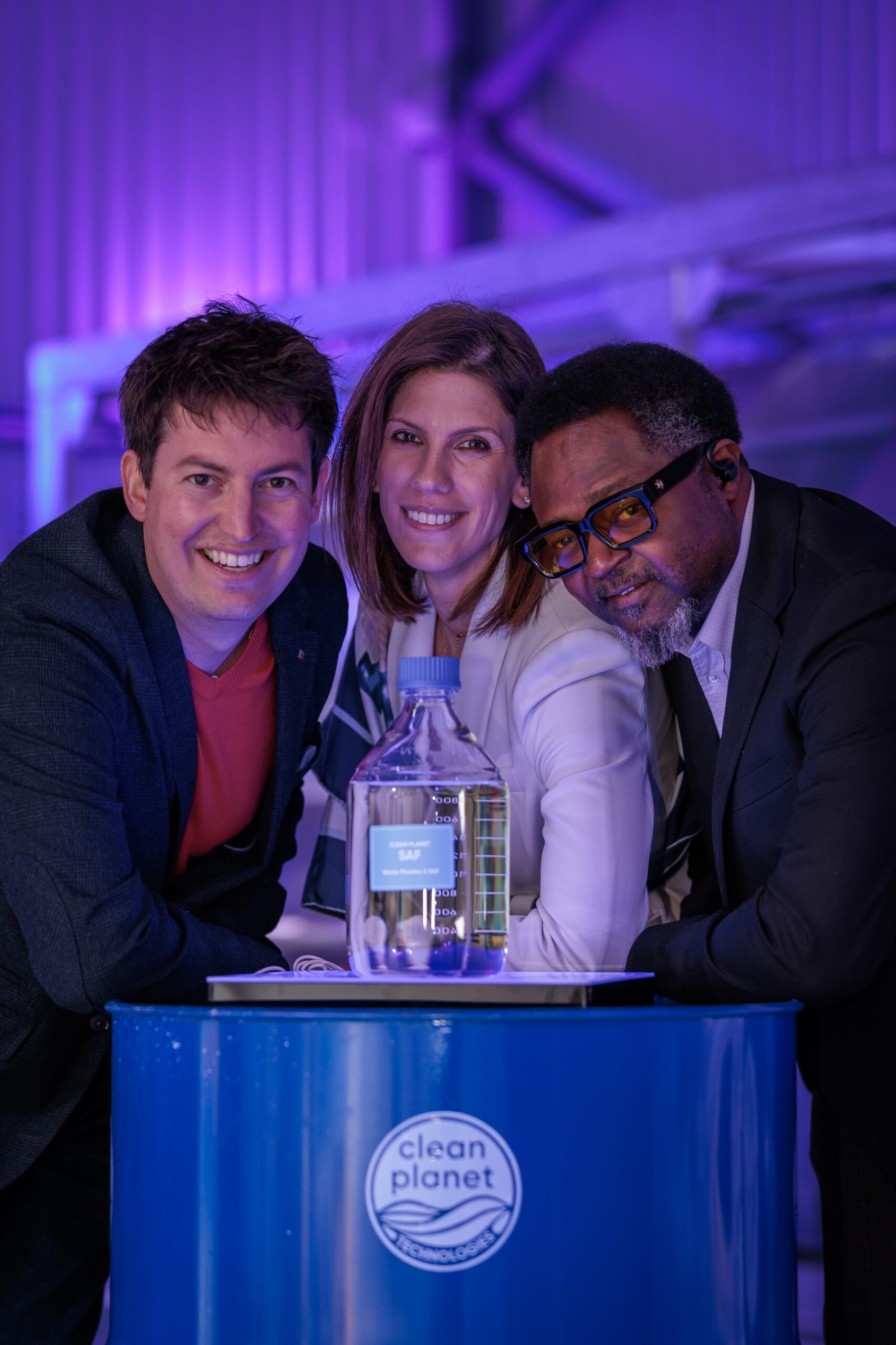
The new pilot facility has already played a critical role in bridging innovation and commercial development, integrating several stages into one single, controlled system optimised to transform hard-to-recycle plastics into SAF. The fundamentals of the process are all technologies which are currently used independently at commercial scale, meaning scaling up the process is not a challenge.
With financial support from the Department for Transport-funded UK SAF Clearing House, Dr Katerina Garyfalou, Chief Operating Officer at Clean Planet Technologies, explains: “The important thing is that our pilot facility will support the growth of others, helping the UK to meet its SAF mandate. UK government policy to decarbonise aviation fuel states that 2% of UK jet fuel demand must be SAF, increasing to 10% in 2030 and 22% in 2040.”
The benefits of being based at Discovery Park
In their quest for the perfect site for their new Innovation Centre and pilot plant, Clean Planet Technologies looked at 145 facilities spread right across the country, ranging from city centre university labs to isolated warehouses in the countryside. With an ecoplant for sister company Clean Planet Energy in Teesside and group offices in London, they were seeking a site that gave both connectivity and space.
The Clean Planet Technologies team appreciated Kent’s easy connectivity to London, with an electric shuttle bus between Discovery Park and Thanet Parkway station to remove friction for visitors. Being located in a beautiful part of the UK was also beneficial, and the team enjoys close access to the vibrant and historic town of Sandwich.
Discovery Park’s technical and engineering teams worked hand in hand with Clean Planet Technologies to customise their space, transforming a storage warehouse into their new Innovation Centre with separate office, kitchen and wellbeing facilities. Discovery Park supported the planning process and project managed the building and fit-out, plus procured local consultants and contractors. 24/7 onsite security provided peace of mind to the team during building works and once their bespoke facility was up and running. The work was completed in just seven months, and COO Dr Katerina Garyfalou cites Discovery Park’s support as key to this fast timeline.
The site’s opening was marked with an event attended by key industry stakeholders and local government representatives, and was reported by the BBC as major news for Kent. The pilot facility has moved quickly from construction to operation.