
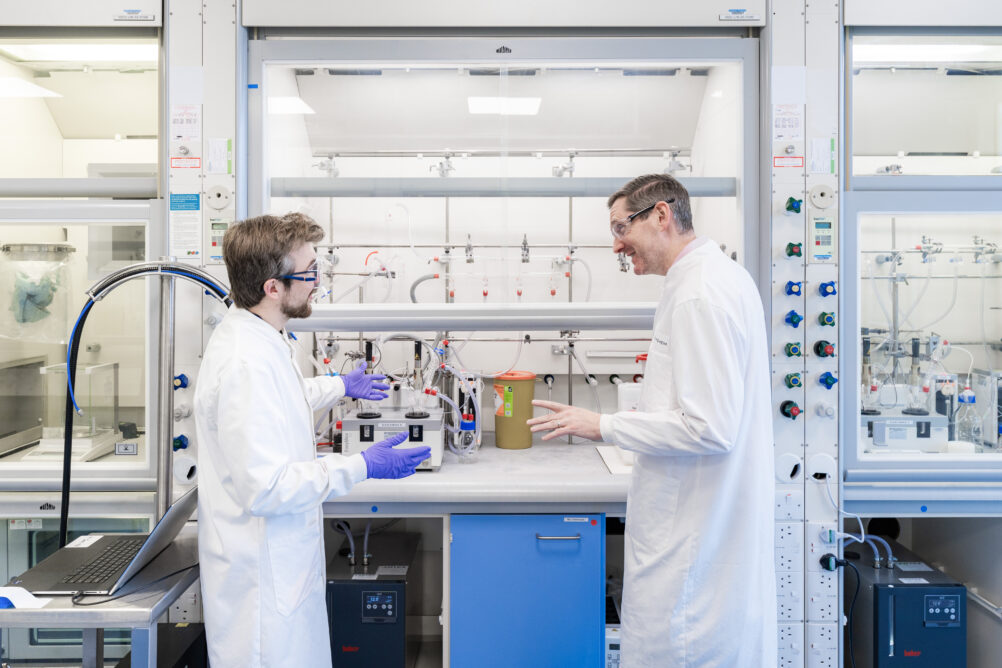
For pharmaceutical leaders, transforming an early-stage synthetic route into a scalable and reliable manufacturing process requires far more than achieving target chemistry in the laboratory. Molecules are becoming increasingly complex, with increased pressure to meet tight development timelines.
Global contract development and manufacturing organisation (CDMO) Asymchem has 25 years’ experience working with the world’s biggest pharmaceutical companies, supporting valuable medicines to get out of the lab and into production. Their European HQ in Sandwich serves as an ‘Innovation Hub’ for small molecule R&D and manufacturing, designed to mitigate development risks and accelerate the transition from R&D complexity to practical manufacturing.
For successful industrialisation, process development cannot work in silos. Instead, scale-up should combine and integrate expertise in process chemistry, analytical sciences, process safety, reaction engineering, and good manufacturing practice (GMP).
Experts at Asymchem have shared three focus areas when looking to scale-up in medicines manufacturing. To support successful industrialisation, they urge pharmaceutical leaders to consider process safety, scalability, impurity control, operational robustness, and manufacturing efficiency early in the journey, helping to avoid common problem areas.
__________________________________________________________________
Key take aways:
- Plan for manufacturing conditions, not laboratory conditions. A structured process review at the outset identifies scale-up vulnerabilities and at-risk unit operations, so the experimental plan targets those challenging areas.
- Integrate disciplines early. Process chemistry, process safety, reaction engineering and analytical development should run in parallel rather than in sequence, allowing thermal behaviour, impurity control and scalability to be understood before manufacturing transfer.
- Treat technology transfer as a defined stage. Clear workflows, close collaboration between development and manufacturing teams, and structured after-action reviews at each milestone support reliable GMP production and continuous improvement.
____________________________________________________________________
- Building a targeted experimental plan to consider risks and challenges
Industrial process development should begin with a structured process review and detailed technical discussions, aiming to identify potential scale-up vulnerabilities and prioritise at-risk unit operations. Rather than focusing only on laboratory performance, a thorough assessment evaluates how the process may behave under manufacturing conditions and where additional understanding is required.
Building a targeted experimental plan is essential for every scale-up process. A strong plan should include an overview of critical process understanding, identified technical, safety, and operational risks, along with clear mitigation strategies.
- Combine expert teams and technology
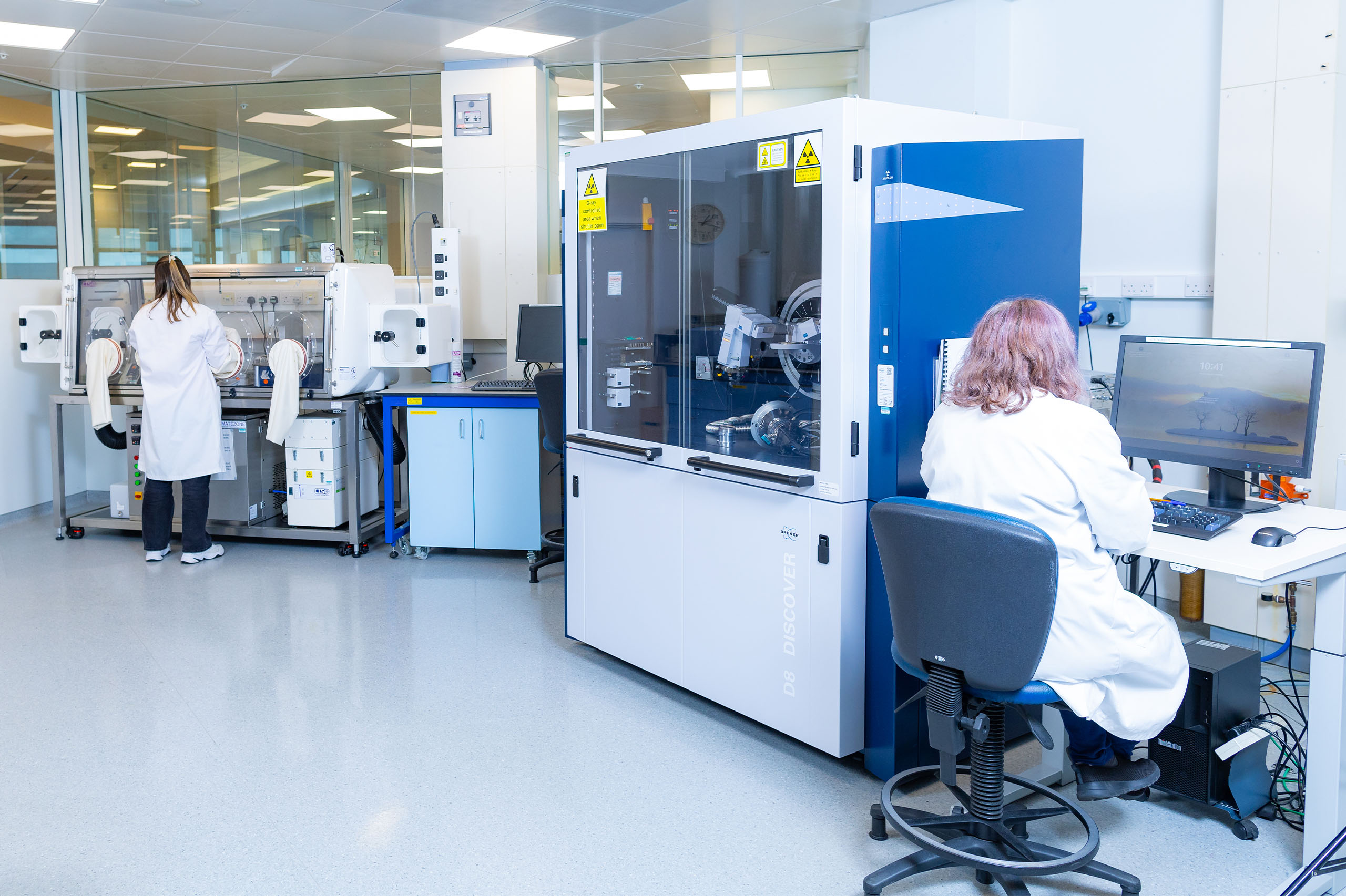
Advanced instrumentation and highly experienced scientists enable rapid exploration of process improvements and alternative manufacturing strategies.
Consider working with a CDMO with High-Throughput Experimentation capabilities, which efficiently evaluate chemical space and help identify optimal reaction, extraction, and isolation conditions. This advanced technology supports improved process robustness, shorter development timelines, and more efficient use of materials and resources.
A collaborative matrix team structure often works well for scale-up, as it allows process safety specialists to embed safety considerations throughout development, while reaction engineering experts address scale-up risks at the earliest stages. By integrating these capabilities early, teams can proactively evaluate thermal behaviour, operational feasibility, and process scalability before manufacturing transfer.
To proactively mitigate quality risks and strengthen overall process understanding, analytical activities, including method development and impurity identification, should be run concurrently alongside process optimisation. Continuous improvement should be a focus throughout development, supported by ongoing technical reviews and brainstorming sessions to further support innovation and process refinement.
- Prioritise efficient tech transfer and milestone reviews
Once laboratory processes are optimised, completing efficient technology transfer is critical to begin reliable GMP manufacturing operations. Seamless technology transfer can be supported through clear workflows, strong communication, and close collaboration between development and manufacturing teams.
Manufacturing activities within GMP laboratories and GMP production plants enable flexible delivery from gram- to kilogram-scale quantities, while comprehensive quality control testing helps ensure product quality, batch consistency, and regulatory compliance throughout production.
Following major project milestones, consider completing structured after-action reviews to help identify opportunities for continuous improvement, delivering measurable operational and technical benefits across the development lifecycle.
Conclusion
Successfully scaling a pharmaceutical process requires more than good laboratory chemistry. Early consideration of process safety, analytical development, technology transfer and manufacturing scalability can significantly reduce development risk and accelerate the route to commercial production. Discovery Park provides pharmaceutical companies with access to specialist manufacturing facilities, experienced partners and advanced infrastructure that supports every stage of this journey.
____________________________________________________________________
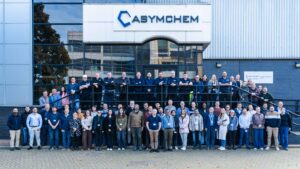
Asymchem – European headquarters and pilot manufacturing facility
Global CDMO Asymchem chose Discovery Park for its European headquarters, establishing laboratory and pilot manufacturing capabilities to support future growth.
- Advanced flow chemistry laboratory capabilities
- High-throughput experimentation and biotransformation screening
- A pilot-scale plant capable of producing over 300 batches of product per year, from 1 to 150 kilos per batch, with room to scale even further
- 100+ employees on site
_______________________________________________________________________
Interested in Manufacturing Operations at Discovery Park?
Explore cGMP manufacturing facilities, development opportunities and specialist
infrastructure designed to support growth from pilot production to commercial
Manufacturing.
Learn more about specialist manufacturing spaces available at Discovery Park
Visit our Contact Us page to request a site visit
_______________________________________________________________________
Frequently asked questions (FAQs)
What is process development in pharmaceutical manufacturing?
Process development turns a synthetic route that works in the laboratory into one that can be run reliably and safely at manufacturing scale. It covers process safety, impurity control, reaction engineering and analytical method development, and begins well before a molecule reaches GMP production.
What is GMP manufacturing?
Good Manufacturing Practice (GMP) is the regulatory standard governing how medicines are produced and controlled. GMP manufacturing requires validated processes, documented procedures, controlled facilities and comprehensive quality control testing to ensure batch consistency and regulatory compliance.
What are the most common scale-up risks?
The recurring risks are thermal and process safety hazards that only emerge at scale, impurities that grow under manufacturing conditions, and unit operations such as extraction or isolation that behave differently in larger vessels. Identifying them through an early process review is more effective than resolving them under time pressure later.
What is technology transfer, and why does it matter?
Technology transfer is the handover of a developed process from the development team to the manufacturing team. Many scale-up problems are traced to gaps in this handover, so clear workflows and close collaboration between the two teams are essential.
What is the difference between pilot-scale and commercial manufacturing?
Pilot-scale manufacturing produces material at intermediate volumes, typically kilograms rather than grams, to prove a process works outside the laboratory and to supply clinical trials. Commercial manufacturing produces material at full volume for market supply.
What manufacturing facilities are available at Discovery Park?
Discovery Park offers cGMP manufacturing facilities, laboratory and pilot-scale space, with the specialist infrastructure required to support growth from development through to commercial production. The campus is home to established manufacturing partners, including Asymchem’s European headquarters and pilot plant, giving companies access to experienced neighbours as well as facilities. Learn more about specialist manufacturing spaces available at Discovery Park.